What base does a shed need? Concrete, slabs or grids
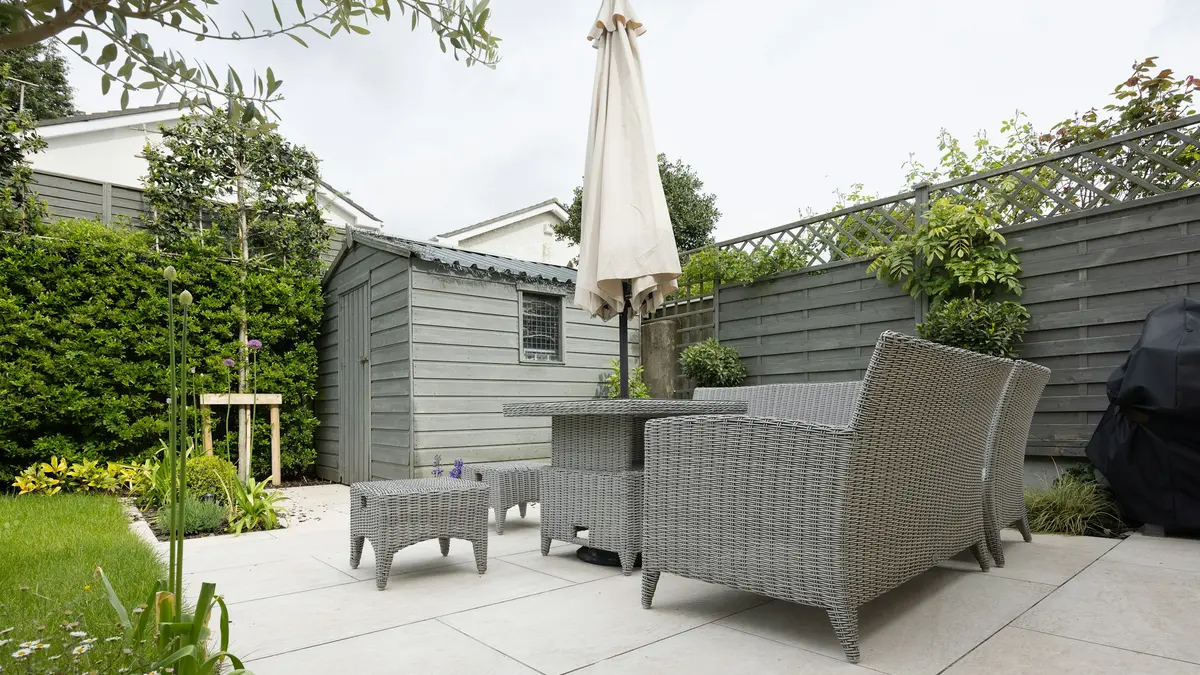
Short answer: Paving slabs or a gravel-filled plastic grid suit most sheds, and a concrete slab is the strongest choice for large sheds, workshops and summerhouses. Whichever you pick, the base has to be firm and level, and the maker's own rule on size comes first because they don't all agree.
Updated
Forest Garden says an unsuitable base is the most common reason its installers have to abandon a job.
Why the base matters
A shed on soft or uneven ground twists as the ground moves. Doors stick, joints open and the floor sits in the wet. A firm, level base spreads the load and keeps the timber off the soil. If a maker's installer finds the base isn't level, they may refuse to build on it and charge for the wasted visit. Power Sheds warns that the wrong base can also void the guarantee.
Choose a spot where rainwater doesn't run to or pool. Forest Garden says to avoid ground that stays wet.
The main types
| Base | Good for | Watch for |
|---|---|---|
| Concrete slab | Large sheds, workshops and summerhouses. The strongest and longest-lasting. | The most work, and it needs to cure before building. |
| Paving slabs | Most sheds. | Slabs must be bedded and level with each other. |
| Plastic grid base | Most sheds. Quick to lay, and filled with gravel it drains well. | Level and compact the ground and lay a membrane. Fill every cell for a larger or heavier building. Tiger Sheds suggests concrete for a very large or heavy building. |
| Timber frame or bearers | Gently sloping ground, where a frame can be levelled. | Use pressure-treated timber and keep it off the soil. |
Can a shed go straight on grass, gravel or an old patio?
Not on grass or loose gravel on their own: they move, hold water and are rarely level. An existing patio can work if it's solid and level across the whole footprint. Check it with a long spirit level before you order.
What the makers say
Makers' advice differs, so follow the guide for the building you buy. Three examples:
- Forest Garden asks for a base level to within 15mm edge to edge, and suggests a concrete base the same footprint as the shed so rainwater runs off. Its base guide asks for 450mm of working space all round, but its installation team asks for at least 24 inches (about 610mm) round the whole building. If the maker is building it, allow the larger.
- Waltons' concrete base guide says at least 100mm wider and longer than the shed.
- Power Sheds says the base should be the exact same size as the floor.
If in doubt, ask us before you build.
Before the shed arrives
- Check the base size against the maker's rule, measured from the floor, not the roof overhang.
- Check it's level along its length and width with a straight edge and a spirit level, and square by measuring both diagonals.
- Leave room round it to build and, later, to treat the walls.
- Give concrete time to cure. Waltons says the surface can seem solid within a couple of days, but it takes around 28 days to reach full strength.
- Plan to sit the shed on its bearers, even on concrete, so air moves underneath. Forest Garden says to raise the shed 50mm above the ground.
Staying safe while you build it
- Check for buried pipes and cables before you dig.
- Wear waterproof gloves and eye protection with wet cement or concrete. It can burn skin and eyes.
- Cutting slabs makes silica dust, which damages the lungs. Use a saw with a water attachment or dust extraction and wear an FFP3 mask, or use a block splitter instead.
See also: choosing a garden shed and will it fit?
Please note: this guide is general advice to help you choose, not professional or legal advice. Every garden and every product is different, so always follow the maker's instructions and check with your council or a qualified tradesperson if you're unsure.
Sources for this guide
The pages we checked this guide's facts against, so you can read them for yourself. A link here isn't a recommendation.
- Forest Garden: Sheds, storage and summerhouses: base preparation guide (PDF); Installation service; Project guides and top tips: sheds; Guarantee; Beckwood 8x6 apex shed
- Waltons: How to build a paving slab shed base; How to build a concrete shed base
- Power Sheds: How to build a shed or cabin base
- Garden Buildings Direct: How to build a shed base
- Tiger Sheds: How to install a plastic shed base kit
- IBRAN: Plastic shed base
- HSE: Cement; Cutting paving, blocks, kerbs and flags; Construction dust; HSG47: Avoiding danger from underground services
- LinesearchbeforeUdig: Search before you dig