Choosing garden furniture: materials, set sizes and winter care
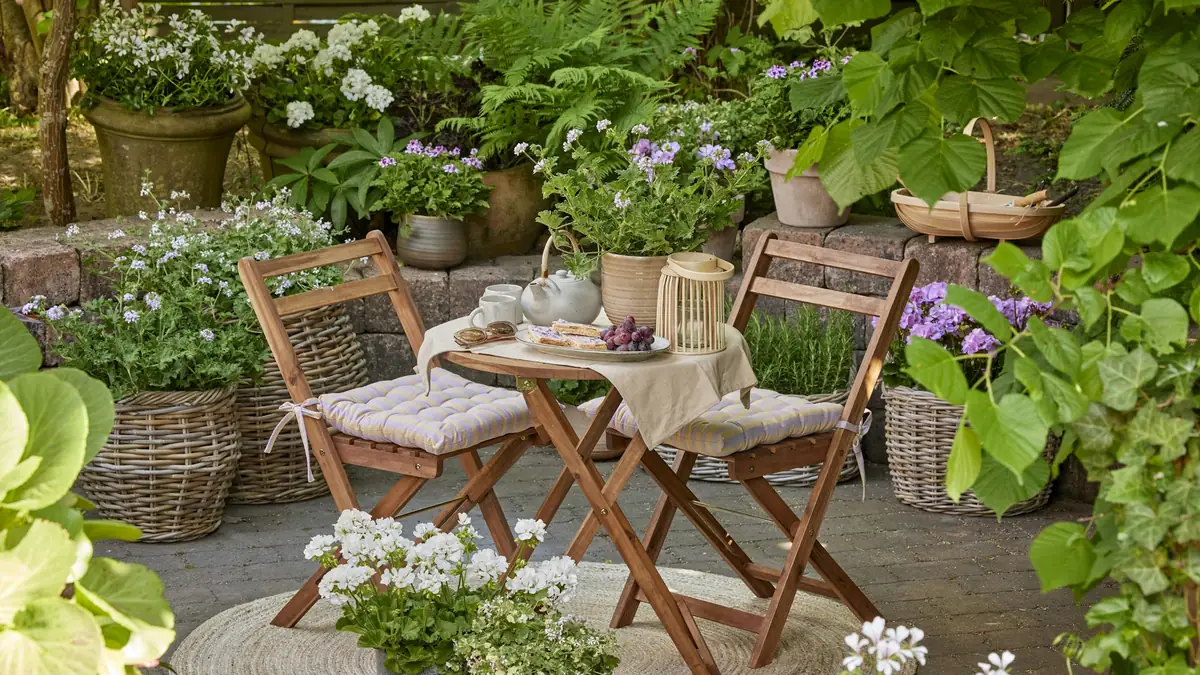
Short answer: For a set that stays outside, a powder-coated aluminium frame won't rust. Synthetic rattan or rope woven over it is light and stands up to rain. Teak and other hardwoods look warm and last well with a little care. Measure the space with the chairs pulled out, plan where the cushions go in winter, and match the parasol base to the parasol's size and type.
Updated
This guide helps you choose garden furniture that fits your space and lasts through British weather. It covers bistro, dining and lounge sets, their materials and care, how big to go, cushions, covers and winter storage, and parasols and their bases.
Start with how you'll use it
| Set | What it is | Where to look |
|---|---|---|
| Bistro set | A small round or square table with two chairs, often folding. Made for a coffee in the morning sun or a drink on a balcony or in a small corner. | Bistro sets |
| Dining set | A table at dining height with four to ten chairs, for proper meals outside. | Dining sets |
| Corner and lounge sets | A low sofa or corner sofa with deep cushions and a coffee table, for sitting back with friends. Some come with a taller table you can eat at. | Lounge sets |
| Recliners | Chairs with backs that tilt, often with footstools, so you can sit up for lunch and lean back after. | Lounge sets |
| Egg chairs | A rounded, high-sided woven seat, either on legs or hanging from a frame. A hanging one needs room around it to swing. | Bistro sets, Chairs |
| Chairs on their own | Extra seats for a table you already have, or a pair for a quiet spot. | Chairs |
Materials and how they cope with the weather
| Material | Good for | Watch for |
|---|---|---|
| Aluminium | Light, low upkeep and it doesn't rust. Usually powder-coated in a colour. | Metal gets hot in strong sun. Light pieces are worth putting away in a shed or garage before a storm. |
| Steel | Often cheaper than aluminium. | It rusts wherever the coating is damaged, and rust can run off onto light paving. |
| Synthetic rattan | A woven look made from polyethylene resin. It stands up to rain far better than natural wicker. | It's light, so it can blow over in strong winds. Check what the frame inside is made of. |
| Rope weave | A softer, woven look, with outdoor rope wrapped round a metal frame. | Not always fully weatherproof. Which? lists one rope set whose care advice says to cover it when it's not in use. |
| Teak | A dense hardwood full of natural oils that can stay out all year. | It turns silver-grey, usually within the first year, unless you keep oiling it. |
| Acacia, eucalyptus and other hardwoods | A warm wood look that lasts a long time if it's cared for. | It needs oiling every year, and some makers' guarantees depend on it. |
| Plastic and resin | Budget sets that often stack, shrug off rain and come ready assembled. | Not as sturdy or long-lasting as other materials, and extreme heat can warp it. |
Look at the frame under the weave. A rattan or rope set lasts as long as the frame inside it. Aluminium doesn't rust. Steel holds up while its coating is intact, but once it's scratched or chipped it can rust. One rattan retailer says steel frames can start rusting within a year or two. The listing should name the frame material, so check it before you buy.
Natural wicker stays indoors. Which? says natural rattan isn't weather resistant, which is why most outdoor rattan is synthetic. If you choose natural wicker, have somewhere to store it whenever it isn't in use.
Teak goes grey, and that's fine. One teak maker says the silver-grey is only on the surface: the wood is no weaker and no less weather resistant for it. To keep the golden colour, you'd need to oil it. Oil only sits on the surface and wears off, so you'll need to keep doing it. Otherwise a wash with warm soapy water twice a year is all teak needs.
Other hardwoods need oiling. Royalcraft says its acacia and eucalyptus furniture needs a hardwood sealer oil every year after the first. Skipping it means the guarantee no longer applies. Check the care notes for any wooden set you're looking at.
How big to go
Measure the patio or lawn you'll use, then allow for the chairs. One patio guide suggests allowing 50 to 60cm behind the table edge for someone sitting in a chair, plus at least another 90cm for people to walk past. So where people need to get by, allow about 1.5m behind each seat.
- Four seats. A four-seater table is usually around 120 by 75cm, or 100 to 120cm across if it's round, and fits a patio of about 2.5m square.
- Six seats. Tables for six are around 150 by 90cm, or 130 to 140cm round, and need a patio of at least 3.5m by 3m.
- Round or rectangular. A rectangular table can stand against a wall or fence, which saves space on that side. A round one has no corners to bump into but needs room all the way round.
- Lounge sets. Corner sofas are big. Measure both arms of the L and leave room for the coffee table and your legs.
Before you order, mark the table's size on the ground with masking tape, set chairs round it and pull one back as if you're sitting down. Then compare the set's measurements, not just its photos: seat depth and arm width make a real difference to how comfortable it is.
Cushions that last
- Fabric. Acrylic and olefin hold their colour best. Polyester is the most common, and one rattan retailer describes 230gsm and upwards as a decent weight. Seams sewn with polyester thread outlast cotton, which rots.
- Filling. Which? says polyester filling flattens over time. Foam holds up better, and denser foam is better still.
- Rain. Royalcraft says showers bead off its shower-resistant fabric, though in heavy or persistent rain water can get in through the seams. Which? says most cushions are best brought in when it's wet or cold, to stop mould and mildew.
Through the winter
Royalcraft advises keeping furniture and cushions indoors, or under a good-quality cover, to protect them from bad weather. If yours stays out:
- Use a cover that's waterproof and breathable. Bramblecrest warns that plastic sheeting traps moisture and can do more harm than leaving furniture uncovered. Look for air vents and tie-down straps for windy days.
- Get the size right. Which? suggests pushing the chairs right in under the table, then measuring the length, width and height for the cover.
- Bring the cushions in. Store them somewhere dry over autumn and winter. A cushion storage box by the seating gives you somewhere to put them quickly when a summer shower comes over.
- Deal with rust early. On steel, treat any rust spots as soon as you see them. Royalcraft doesn't cover rust on its iron and steel furniture.
Read the guarantee
Compare what a guarantee covers, not just how long it runs. Bramblecrest gives a five-year guarantee on many of its frames, covering manufacturing defects only.
Its cushions, cushion boxes, covers, parasols and bases get one year. The guarantee leaves out fading, which it says can happen to any product left in strong sun for long spells, and damage from high winds.
You also have to register within 28 days of delivery. The terms vary from maker to maker, so read them before you buy.
Parasols and bases
A centre-pole parasol stands straight up, usually through the hole in the middle of a table. A cantilever parasol hangs from an arm to one side, so it leaves the table clear and can usually be turned and tilted. Both need a base, which often comes separately.
The base has to be heavy enough for the parasol's size and type. One parasol specialist recommends these minimum base weights:
| Parasol | Base weight |
|---|---|
| Centre pole, up to 2.5m | 15 to 25kg |
| Centre pole, 2.5m to 3m | 40kg |
| Centre pole, 3m to 3.5m | 60kg |
| Cantilever, 2.7m to 3m | 90kg |
| Cantilever, 3.5m and over | 120kg or more |
- Through a table. The table steadies the pole, so the same specialist says 15 to 25kg is often enough for a centre-pole parasol up to 3m in a sheltered garden. It still needs a base.
- Exposed gardens. If your garden is on a hill, by the coast or facing open country, go up one weight in the table above. Tilting the canopy catches more wind too.
- Advice varies. Which? gives lower figures, such as 50kg for a 4m cantilever. We'd follow the parasol maker's own figure first, and go heavier if you're not sure.
- Fillable bases. These are easy to carry and fill in place. Sand is denser than water, so it adds more weight, and water can slowly evaporate, so check the level each season.
- Pole size. Check the parasol's pole fits the base's socket before you buy.
Take the parasol down when it's windy, and let it dry out before you fold it away. Royalcraft advises keeping parasols indoors over autumn and winter. Our parasol bases each list their weight.
A quick checklist
- The kind of set, and how many seats you'll use most weeks.
- The space, measured with the chairs pulled out.
- The frame material under any weave, and its coating.
- Care: whether the wood needs oiling, and how often.
- Cushion fabric and filling, and somewhere dry to keep them.
- A breathable, waterproof cover, or room indoors for winter.
- What the guarantee covers, and whether you need to register.
- A parasol base heavy enough for the parasol's size and type.
See also: all our garden furniture.
Please note: this guide is general advice to help you choose, not professional or legal advice. Every garden and every product is different, so always follow the maker's instructions and care notes.
Sources for this guide
The pages we checked this guide's facts against, so you can read them for yourself. A link here isn't a recommendation.
- Which?: How to buy the best garden furniture
- Bramblecrest: Can you leave garden furniture out in the rain?; Bramblecrest guarantee
- Royalcraft: Product care and maintenance instructions
- Kingsley Smythe: Should you oil teak garden furniture?
- White Stores: Things to consider when buying rattan garden furniture online
- Plot and Patio: How to choose the right size dining set for your patio
- Ruma: Parasol base weight: a UK guide